

Deligreencs
EU Stock- Deligreen 10kWh 51.2V 200Ah LiFePO4 Battery – CATL Cells, JK V19 200A Smart BMS
EU Stock- Deligreen 10kWh 51.2V 200Ah LiFePO4 Battery – CATL Cells, JK V19 200A Smart BMS
Verfügbarkeit für Abholungen konnte nicht geladen werden
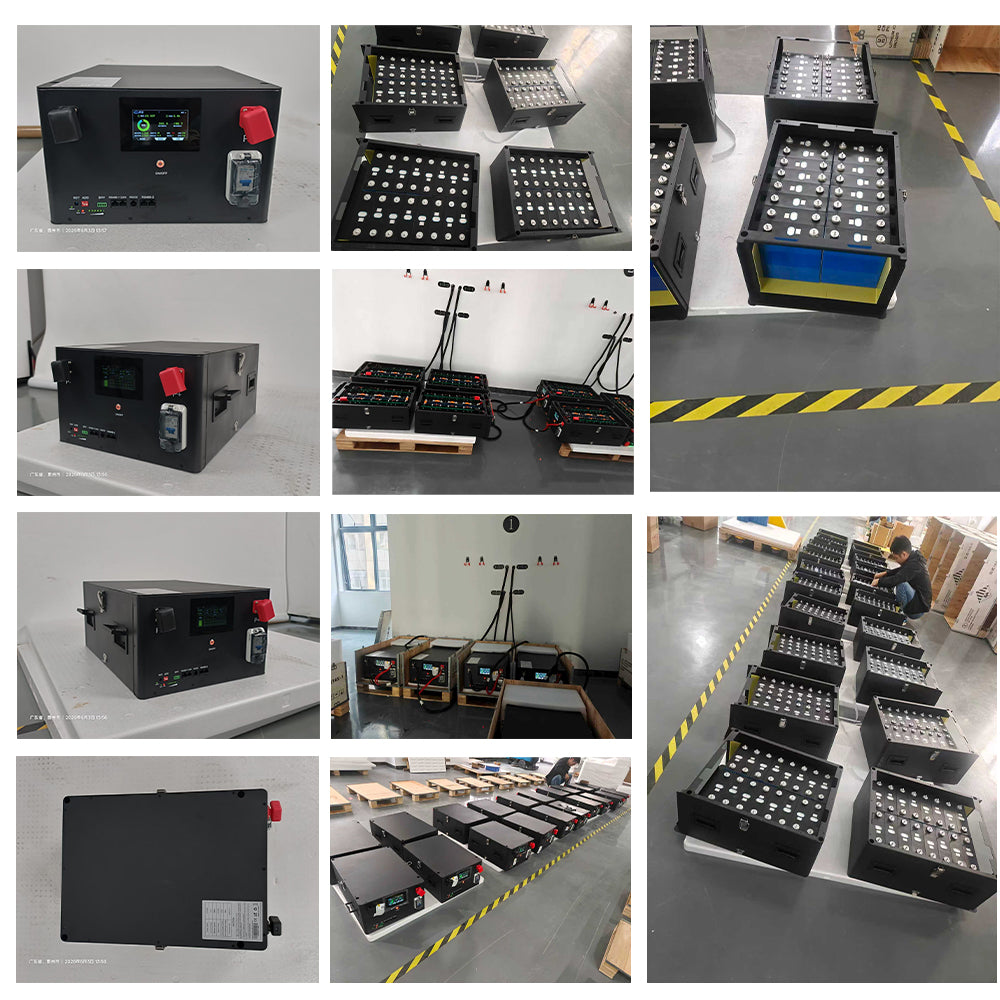
In stock in our Poland warehouse. The E10 is a fully assembled 51.2V 200Ah lithium iron phosphate (LiFePO4) battery that delivers 10,240 Wh of storage, ready to connect to your hybrid or off-grid inverter. It is built from 16 Grade A CATL prismatic cells, managed by a JK 200A smart BMS with 2A active balancing, Bluetooth monitoring, CAN/RS485 inverter communication and multi-level protection.
If you are sizing a home solar storage system, a backup power setup or a commercial energy-storage project, this is the building block: one 10kWh unit today, up to 163.84 kWh when you parallel 16 units.
Key specifications at a glance
- Energy: 10,240 Wh (51.2V × 200Ah)
- Voltage: 51.2V nominal, 57.6V max charge
- Current: up to 200A continuous charge and discharge (about 10kW at nominal voltage)
- Cells: 16 × CATL LiFePO4, 16S1P
- BMS: JK V19-PB2A16S20P with 2A active balancing
- Communication: CAN, RS485, RS232, plus Bluetooth app monitoring
- Scalability: up to 16 batteries in parallel
- Warranty: 10 years
Why choose the E10 51.2V 200Ah battery?
1. CATL cells: the heart of the pack
Cell quality decides performance and safety. The E10 uses CATL 200Ah-class LiFePO4 prismatic cells (CATL model LEP54H4K1, 202Ah typical capacity). The CATL cell specification lists an internal resistance of just 0.14 ± 0.05 mΩ and supports discharge down to -20 °C. Low impedance means less heat and less voltage sag under load, so more of the stored energy reaches your inverter.
2. Stable, safe LiFePO4 chemistry
Lithium iron phosphate is thermally stable and cobalt-free, which is why it is the standard chemistry for stationary home storage. In the E10 it is paired with a smart BMS that watches every cell, so the pack protects itself and talks to your inverter (details in the BMS section below).
3. 200A JK smart BMS with 2A active balancing
The E10 is controlled by a JK V19-PB2A16S20P BMS: 16-cell voltage sampling, 200A continuous rating, active balancing, Bluetooth, CAN/RS485 and configurable protection. See the full feature breakdown below.
4. Built-in display and easy inverter integration
A front-panel display shows pack status at a glance. Communication happens over CAN or RS485 with preloaded protocols for popular low-voltage hybrid inverters, so your inverter can read SOC, voltage, current and alarms directly and manage charging correctly (closed-loop communication).
JK smart BMS features in detail
The battery management system is what turns 16 cells into a reliable, inverter-friendly storage unit. Here is what the JK BMS in the E10 does.
Active balancing (up to 2A)
Instead of wasting energy as heat, the BMS uses an energy-transfer active balancer that moves charge from higher-voltage cells to lower-voltage cells through the BMS board. Balancing switches on automatically when the voltage difference between any two cells exceeds a set threshold, and switches off when the difference falls below it. The start voltage, trigger difference and balancing on/off can be set in the app. Balanced cells mean the pack reaches full charge and cut-off together, so no single weak cell limits the others as early.
Multi-level protection
| Protection | How it works |
|---|---|
| Cell overvoltage (charge) | Charging is stopped if any single cell exceeds its limit and resumes only when all cells are below the recovery voltage. |
| Cell undervoltage (discharge) | Discharge is cut when any cell drops below its limit and re-enabled after recharging above the recovery voltage. A separate auto-shutdown voltage protects the cells during standby. |
| Charge / discharge overcurrent | Continuous current limits, trip delay and release time are all adjustable to match your charger, inverter and load. |
| Short-circuit | Fast disconnect with an adjustable delay and automatic recovery, so large inverter capacitor inrush at start-up is less likely to cause a false trip. |
| Over-temperature | Separate charge and discharge over-temperature protection, each with a recovery temperature. |
| Low-temperature charging | Charging is blocked when the temperature is below the set threshold and restored once it recovers. |
| MOSFET over-temperature | The BMS monitors its own power switches and cuts out if they overheat. |
| Parallel current limiting | If a charge overcurrent occurs, the BMS can limit charging current (to about 10A) instead of simply disconnecting, which helps when several batteries are paralleled. |
Precise monitoring
- ±3 mV cell voltage accuracy across all 16 cells
- High-precision current measurement and coulomb counter for SOC and capacity calculation
- Up to five temperature channels supported by the BMS (one on-board sensor plus four external NTC probes)
- Time-stamped event logging for diagnostics
- Front-panel display on the battery for quick status checks
Bluetooth app and PC software
Connect with the JK BMS app (Android 7+ and iOS) to see individual cell voltages, current, temperatures, SOC and alarms. From the same app you can switch charge and discharge on or off, enable or disable balancing and adjust protection parameters. For multi-battery installations, the JK PC monitoring software can poll every battery in the chain from one computer over RS485.
Inverter communication and parallel networking
- CAN and RS485 to the inverter with selectable protocols (CAN defaults to 250 kbps), plus RS232 for service
- Dedicated RS485 parallel ports (115200 baud) for linking batteries and PC monitoring
- 4-bit DIP switch addressing (0–15): address 0 is the master, so up to 16 batteries are identified on one bus
- Preloaded inverter protocols for fast commissioning
Alarm outputs and standby behaviour
- Two dry-contact outputs that can switch on over-temperature, overcharge or over-discharge states, to drive a buzzer, fan, relay or external alarm
- Intelligent sleep: after about 26 hours with charge and discharge current below 1A, the BMS can power down to save energy; it wakes with the ON/OFF button or when a charger is connected
- Very low self-consumption: about 12 mW in standby and about 1.1 W in operation (BMS board figures)
- Low-loss power path: BMS board loop resistance of 0.35 mΩ maximum, rated for 400A instantaneous current
Inverter compatibility
The E10 is designed for 51.2V (48V-class) low-voltage systems and ships with multiple inverter protocols. The manufacturer lists compatibility with brands including Deye, Pylon-protocol systems, SRNE, GoodWe, SOFAR, SMA, Growatt, Luxpower, Sunsynk, Solis and Victron, among others. Protocol support can vary by inverter model and firmware, so contact us with your inverter model and we will confirm the correct protocol and cable setup before you order.
Scale from 10kWh to 163kWh
Connect up to 16 E10 batteries in parallel using the battery-to-battery links and RS485 communication chain. Set each unit's address with the DIP switch (0–15) and the master battery reports the system to your inverter. Typical sizes:
| Batteries (parallel) | Energy | Max current |
|---|---|---|
| 1 | 10.24 kWh | 200 A |
| 2 | 20.48 kWh | 400 A (pack limit) |
| 4 | 40.96 kWh | 800 A (pack limit) |
| 16 | 163.84 kWh | 3,200 A (pack limit) |
Important: these batteries must not be connected in series, and must not be mixed with other battery chemistries or other models.
Full technical specifications
| Model | E10 (Deligreen 10kWh 51.2V 200Ah) |
|---|---|
| Chemistry | Lithium iron phosphate (LiFePO4) |
| Cells | 16 × CATL 200Ah-class prismatic cells (CATL LEP54H4K1, 202Ah typical) |
| Cell configuration | 16S1P |
| Rated voltage | 51.2 V |
| Max charge voltage | 57.6 V |
| Recommended charge parameters | Bulk 57.6 V / Float 55.2 V |
| Discharge cut-off voltage | 44.8 V (low DC cut-off 43.2 V) |
| Nominal / minimum capacity | 200 Ah / 200 Ah |
| Energy | 10,240 Wh |
| Max charge current | 200 A |
| Max discharge current | 200 A |
| BMS | JK V19-PB2A16S20P (200A) |
| Active balancer | 2 A |
| Communication | CAN, RS485, RS232, Bluetooth (app) |
| Discharge temperature | -20 °C to 60 °C |
| Charge temperature | 0 °C to 45 °C |
| Cycle life | 3,500 cycles @ 80% DoD |
| Parallel connection | Up to 16 units (no series connection) |
| Dimensions (W × D × H) | 410 × 560 × 252 mm (16.14 × 22.05 × 9.92 in) |
| Weight | 84 kg net / 98.5 kg gross |
| Packaging | Plywood case, 820 × 500 × 460 mm |
| Marking | CE |
| Warranty | 10 years (covers BMS failure, cell failure, temperature sensors, charge/discharge faults, internal corrosion) |
Installation and safety notes
- Heavy equipment: at 84 kg net (98.5 kg packed), plan lifting equipment or enough people for safe handling.
- Qualified installer: installation must follow local electrical codes and be done by a qualified person with correct polarity, cable size, torque, grounding and DC protection.
- Always isolate first: never work on the battery while it is connected to the grid or powered.
- Protect the cells: install in a dry, ventilated place away from heat sources; charge only within 0 °C to 45 °C, as required by the cell manufacturer.
- Long-term storage: if the battery will sit unused for more than a month, keep it at around 50% charge and top up roughly every three months.
Ordering from our Poland warehouse
This battery is stocked in Poland, so you avoid long overseas lead times and customs complexity for EU delivery. Because each unit weighs nearly 100 kg packed, it ships by freight. [Add your delivery times, VAT invoice information and pickup options here.]
Frequently asked questions
Is the 51.2V 200Ah battery the same as a "48V" battery?
Yes. 51.2V (16 LiFePO4 cells in series) is the nominal voltage of what the market usually calls a 48V lithium battery. It is compatible with 48V-class low-voltage hybrid inverters that support lithium batteries.
How much usable energy does it have?
The pack stores 10.24 kWh nominal. Actual usable energy depends on the discharge cut-off set in your inverter (the pack's discharge cut-off voltage is 44.8 V) and on your load.
Can I connect two or more batteries together?
Yes, up to 16 in parallel. Series connection is not allowed.
Which communication cable do I need?
That depends on your inverter (CAN or RS485, and the pin-out). Send us your inverter brand and model and we will tell you the right protocol and cable.
Can I monitor the battery from my phone?
Yes. The JK BMS supports Bluetooth with the JK BMS app on Android and iOS, so you can view cell voltages, temperatures, current and SOC, and adjust protection parameters. PC monitoring software is also available.
What does the 10-year warranty cover?
Per the manufacturer: BMS failure, cell failure, temperature sensors, charging/discharging faults and internal corrosion. Keep your proof of purchase and contact us with a clear description of the issue to open a claim. [Add your own warranty-handling details and link to the full warranty document.]
Is the battery suitable for cold climates?
It can discharge from -20 °C to 60 °C. Charging is limited to 0 °C to 45 °C (the cell manufacturer's range), so for unheated sheds or garages in Polish winters we recommend installing indoors or in a temperature-controlled space.
Share